
As South Florida navigates the 2026 economic landscape, the Miami real estate market continues to defy conventional national trends. While many metropolitan areas across the United States face price stagnation or rising inventory gluts, Miami-Dade and Broward counties operate on a fundamentally distinct set of economic drivers: sustained out-of-state wealth migration, a disproportionate volume of all-cash transactions, tight single-family housing inventory, and evolving condominium legislation.
Whether you are a local homeowner evaluating the optimal time to sell, an out-of-state professional planning a strategic relocation to Florida, or an international investor seeking long-term capital preservation, understanding the micro-economic realities of the 2026 Miami housing market is paramount to making profitable, informed decisions.
1. Key Market Indicators: Where Does Miami Real Estate Stand Today?
Data compiled from the Miami Association of Realtors and Florida real estate tracking databases highlights several macro trends shaping the market in 2026:
Miami-Dade Key Metrics Snapshot
- Single-Family Home Median Price: Stabilized between $665,000 and $680,000, reflecting resilient demand in master-planned and established suburban communities.
- Existing Condominium Median Price: Averaging $415,000 to $435,000, with significant polarization between newer luxury towers and older buildings navigating structural reserve laws.
- Cash Sales Dominance: Approximately 42% to 45% of all closed transactions in Miami-Dade are completed in all-cash, compared to the U.S. national average of ~28%. This cash cushion insulates South Florida significantly against Federal Reserve mortgage rate fluctuations.
- Months of Inventory: Single-family homes remain in seller’s market territory at approximately 3.8 to 4.2 months of inventory, while condominiums hover in balanced territory at 6.5 to 7.8 months.

2. The Single-Family vs. Condominium Divergence
One of the most defining characteristics of the 2026 market is the divergence between single-family homes and condominium properties.
Single-Family Homes: Supply Inelasticity & Sustained Equity
Miami-Dade County is geographically bounded by the Atlantic Ocean to the east and the protected Everglades agricultural and conservation preserves to the west. With virtually no remaining undeveloped land for sprawling suburban tract homes, single-family supply is fundamentally constrained. Neighborhoods like Coral Gables, Coconut Grove, Pinecrest, Doral, and South Miami continue to experience competitive bidding for turn-key, renovated properties with modern hurricane impact glass and updated mechanical systems.
Condominiums: The Impact of SB 4-D and Milestone Inspections
The condo sector presents a more nuanced story. Following Florida’s landmark Senate Bill 4-D legislation, buildings three stories or higher that have reached 30 years of age (or 25 years if located within three miles of the coastline) must complete mandatory Milestone Structural Inspections and conduct comprehensive Structural Integrity Reserve Studies (SIRS).
«Buyers today are not just looking at the view and finishes—they are scrutinizing the building’s reserve study, upcoming special assessments, and HOA financial health with unprecedented precision.»
— Gladys Molina, South Florida Realtor®
This regulatory shift has created two distinct condo markets:
- Tier 1 (New Construction & Fully Funded Reserves): Luxury developments in Brickell, Edgewater, Sunny Isles, and Downtown Miami built within the last 10–15 years command premium pricing, strong rental yields, and seamless financing.
- Tier 2 (Older Coastal Buildings with Deferred Maintenance): Buildings facing substantial special assessments for concrete restoration, roof replacements, and elevator modernizations offer significant room for buyer negotiation, often selling at noticeable discounts to cash buyers willing to absorb the upcoming capital contributions.
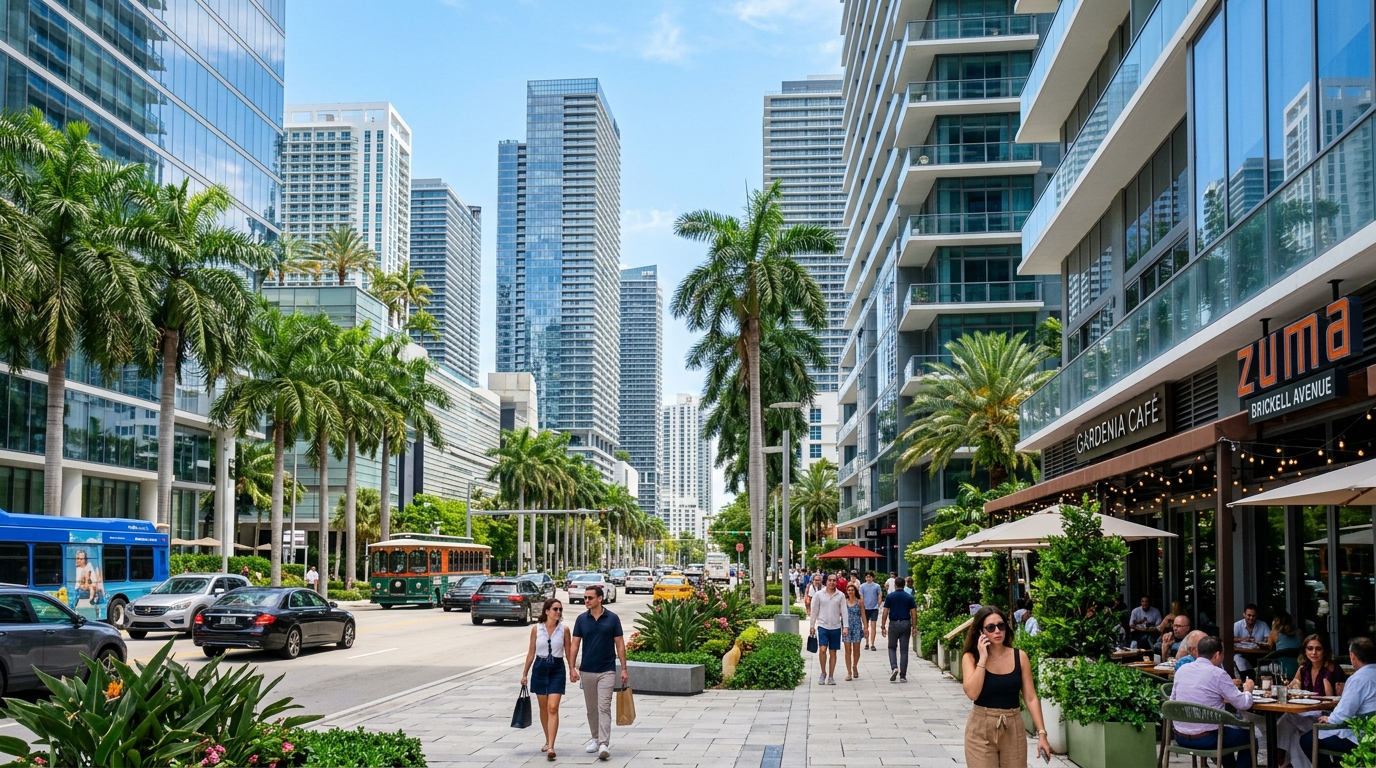
3. The Continued Economic Engine: «Wall Street South» & Tax Migration
The transformation of Miami from a seasonal tourist hub into a permanent global financial capital is no longer a temporary post-pandemic blip; it is a permanent structural migration. Major hedge funds, private equity firms, tech enterprises, and corporate headquarters continue to expand their presence in Brickell and Downtown Miami.
The financial motivation remains compelling for high-net-worth individuals and business owners relocating from high-tax states such as New York, California, New Jersey, and Illinois:
| State Tax Factor | Florida | New York | California |
|---|---|---|---|
| State Personal Income Tax | 0.00% | Up to 10.90% (+ NYC 3.876%) | Up to 13.30% |
| State Capital Gains Tax | 0.00% | Taxed as Ordinary Income | Taxed as Ordinary Income |
| Estate / Inheritance Tax | None | Up to 16.00% («Cliff» Tax) | None (Subject to State Proposals) |
| Florida Homestead Exemption | Up to $50,000 + 3% Cap | N/A | N/A |
For an executive earning $500,000 annually or an investor liquidating a business asset, establishing primary residency in Florida translates to tens—if not hundreds—of thousands of dollars in annual tax savings. A significant portion of this saved capital is redeployed directly into South Florida real estate, sustaining purchasing power even during periods of broader economic conservatism.
4. Top South Florida Neighborhoods to Watch in 2026
🏙️ Brickell & Downtown Miami
Profile: The epicenter of urban living, financial employment, and luxury high-rises.
2026 Outlook: High demand from corporate transferees. Excellent long-term rental appreciation for 1- and 2-bedroom luxury units.
🌳 Coral Gables & Coconut Grove
Profile: Historic prestige, top-rated private and public schools, and verdant canopy streets.
2026 Outlook: Highly defensive luxury market. Single-family homes here retain long-term value exceptionally well with minimal supply volatility.
🏖️ Hollywood & Hallandale Beach
Profile: Coastal Broward County communities offering significant price-per-square-foot advantages over Miami Beach.
2026 Outlook: Premier destination for buyers seeking waterfront access, proximity to Fort Lauderdale-Hollywood International Airport, and solid cash flow.
🏡 Doral & Western Suburbs
Profile: Modern gated master-planned communities, corporate commerce, golf courses, and bilingual family environment.
2026 Outlook: Constant demand from growing families and international buyers seeking modern townhomes and single-family properties.
5. Strategic Action Guide: Navigating the Market in 2026
For Buyers & Investors:
- Conduct Strict Condo Due Diligence: Always review the condo association’s reserve funding percentage, recent engineering milestone reports, and pending insurance claims before submitting an offer.
- Leverage Seller Concessions: In balanced condo sectors, buyers can negotiate seller credits toward interest rate buydowns or closing costs—a strategy rarely available in 2021–2023.
- File for Florida Homestead Exemption Promptly: If purchasing your primary residence, remember to file for your Florida Homestead Exemption by March 1st to lock in your taxable assessment cap under the Save Our Homes benefit.
For Sellers:
- Precision Pricing is Critical: Aspirational overpricing leads to extended days on market and stigmatization. Properties priced accurately relative to recent comps still generate brisk activity and solid offers.
- Address Property Condition Proactively: Homes with updated roofs, 4-point inspection readiness, and complete wind mitigation reports command premium prices because they dramatically reduce the buyer’s homeowners insurance premiums.
- Target Out-of-State Buyers: Professional staging, architectural photography, cinematic video walk-throughs, and digital targeting toward Northeast and Midwest buyers maximize exposure and offer velocity.
Legal Brokerage Disclosure & Equal Housing Opportunity: Gladys Molina is a licensed Florida Real Estate Professional associated with One Stop Realty Holguin Group. All real estate information is deemed reliable but not guaranteed and should be independently verified. Properties subject to prior sale, change, or withdrawal. Neither Gladys Molina nor One Stop Realty Holguin Group provides formal legal, tax, or accounting advice; clients are advised to consult appropriate qualified professionals. Equal Housing Opportunity.
Únete a la discusión